
Let’s be honest. Most weekends in the city start to blur together. Same bars, same brunch spots, same group chat arguing about where to go before everyone ends up at the usual place anyway. The noise never stops, the phone never stops buzzing and Monday always shows up too soon.
At some point you need to get out. Not a fancy resort, not another overpriced city break, but a proper escape: a river, a cabin, a cooler full of cold ones and a few of your best mates with nowhere to be.
That is where fly fishing comes in. It might look like a pastime for quiet old men in tweed, but it is one of the best excuses going to pack up the car, ditch the skyline and spend a weekend outdoors with your crew. Better still, it is far easier to pick up than it looks. Here is how to plan a fly fishing weekend that turns a bunch of city guys into anglers by Sunday.
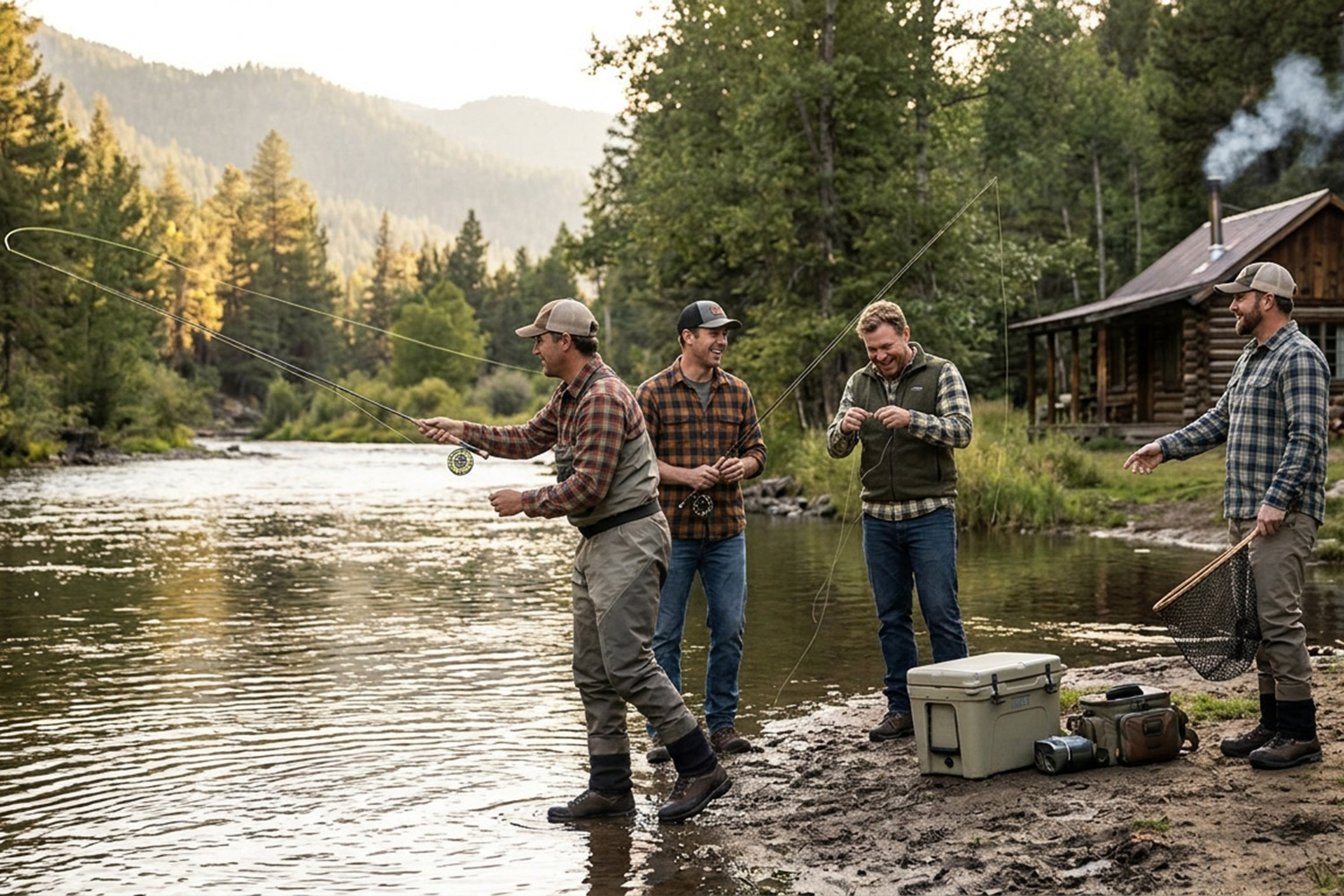
Why Fly Fishing Beats Another Night Out
There is something about standing in a river that resets your head. The sound of moving water, the rhythm of the cast, the total focus of watching your fly drift: there is no room left to think about emails. It is the closest thing to meditation most of us will ever tolerate.
It is also surprisingly social. You will spend the day spread along the same stretch of water, shouting encouragement, trading flies and giving each other grief over tangled lines. Then you regroup at night around a fire to argue over who caught the biggest fish and whose story is exaggerated. Spoiler: everyone’s is.
And unlike golf, nobody needs years of lessons before they can have fun. A total beginner can land a fish on day one.
Fly Fishing 101: The Two-Minute Version
In regular spin fishing, a heavy lure carries the line out when you cast. In fly fishing, the flies weigh almost nothing, so the weight is in the line itself. You cast the line, and the line carries the fly. That is why fly casting has that signature back-and-forth loop you have seen in the movies, and why it is so good at landing tiny imitation bugs softly on the water, just like the real thing.
The Gear: Keep It Simple
You do not need to drop a month’s rent at an outdoor shop. A basic setup is just a handful of pieces that work together.
Rod. Fly rods are rated by weight to match the line they cast. A 9-foot, 5-weight rod is the classic all-rounder for trout and panfish.
Reel. Mostly it just holds your line and adds drag when a bigger fish makes a run. Keep it simple and matched to your rod.
Fly line. The thick, colored line that does the casting. A weight-forward floating line is the most forgiving choice for first-timers.
Backing, leader and tippet. Backing sits under the fly line in case something big takes off. The leader and tippet are the clear, tapering line that connects to your fly so the fish do not spot it.
Flies. A starter selection of dry flies, nymphs and streamers will cover most of what you will run into.
Why Everyone in the Crew Should Grab a Starter Kit
Here is where most groups go wrong. One guy researches for weeks, another borrows his uncle’s 30-year-old rod, and someone shows up with gear that does not match. Then half the weekend is spent untangling instead of fishing.
The easy fix is to have everyone pick up one of the fly fishing starter kits designed for beginners. A good kit pairs a balanced rod, reel and line that are built to work together, often pre-spooled and ready to fish straight out of the box. It usually costs less than buying the pieces separately, and it means every guy on the trip has a setup that actually casts well. Look for a matched system, a rod tube to survive the car trunk and a solid warranty.
Pro tip: get the kits delivered a couple of weeks before the trip. A few evenings practicing in the park will save a lot of frustration later.
Planning the Escape
Pick water within a few hours’ drive. The beauty of this trip is that you can leave Friday after work and be on the water Saturday at sunrise. Look for stocked trout streams, quiet lakes or ponds full of bluegill and panfish. Panfish are perfect for beginners because they bite eagerly and forgive sloppy casts, which means everyone gets action early.
Book a cabin, not a hotel. A rented cabin or riverside lodge makes the weekend. You want a porch, a fire pit and a kitchen big enough for someone to grill whatever you catch (or the steaks you brought as backup).
Sort the licenses. Every angler needs a fishing license for the state or region you are visiting. Most can be bought online in a few minutes, so get it done before you lose phone signal.
Pack smart. Beyond your kits, bring a few accessories that make a big difference:
- Polarized sunglasses to cut glare, spot fish and protect your eyes from wayward hooks
- Nippers and forceps for trimming line and unhooking fish quickly
- A landing net with a soft rubber bag if you plan to release what you catch
- Floatant to keep dry flies riding high
- Waders and boots if you want to get into the river, though fishing from the bank is fine for day one
Throw in a cooler, a speaker, a deck of cards and decent coffee. You are roughing it, not suffering.
Time it right. Fish feed most actively early in the morning and in the evening, when light is low and insects are hatching. That works out nicely: dawn session, long lazy lunch, nap in a hammock, then back out for the evening bite before dinner.
Learning to Cast (Without Hooking Your Buddy)
Casting rewards rhythm, not muscle, which is humbling news for the guy who just spent a year in the gym. Start on open grass with a bit of yarn tied to the end of your leader instead of a hook.
The basic overhead cast goes like this. Lift the line smoothly and snap into a crisp back cast, stopping the rod near vertical. Pause and let the line straighten out behind you. Then drive forward and stop the rod again, letting the line roll out in front. The pause is where everyone messes up. Rush it and the line collapses or cracks like a whip, usually right as your friends are watching.
Give each other some space on the water, too. A good rule is at least two rod lengths between anglers, which keeps the hooks out of ears and hats.
When you are ready to fish, read the water. Riffles, seams where fast and slow current meet, and spots near submerged rocks or logs tend to hold fish. If you can, book a local guide for the first morning. A few hours with someone who knows the river will fast-track the whole crew.
Fish Like a Gentleman
Good anglers leave a place better than they found it. Many practice catch and release, so pinch down your barbs, keep fish in the water as much as possible, handle them with wet hands and let them go gently. Pack out every can and wrapper, respect private property and give other anglers room. The goal is that this river is still worth driving to next year.
The Bottom Line
The city will still be there on Monday. But a weekend on the water with your best mates gives you something the usual night out never does: quiet, focus, a bit of challenge and stories you will retell for years. You do not need expensive gear or a lifetime of experience. Grab a balanced setup, learn the basic cast, pick friendly water and point the car out of town. Before long you will feel that first tug on the line, and the group chat will already be planning the next trip.

Reead is a French travel blogger based in Las Vegas and the founder of Reead.com, a blog launched in 2009. Specializing in miles, points, and travel credit cards, he shares strategies to optimize loyalty programs, earn points faster, and travel in better conditions for less.
He also publishes guides and practical tips for Americans traveling to France, along with analyses of American Express cards and real travel experiences with airlines and hotels.